
Brand Identity (Part 1) - Your Logo is Not Your Brand
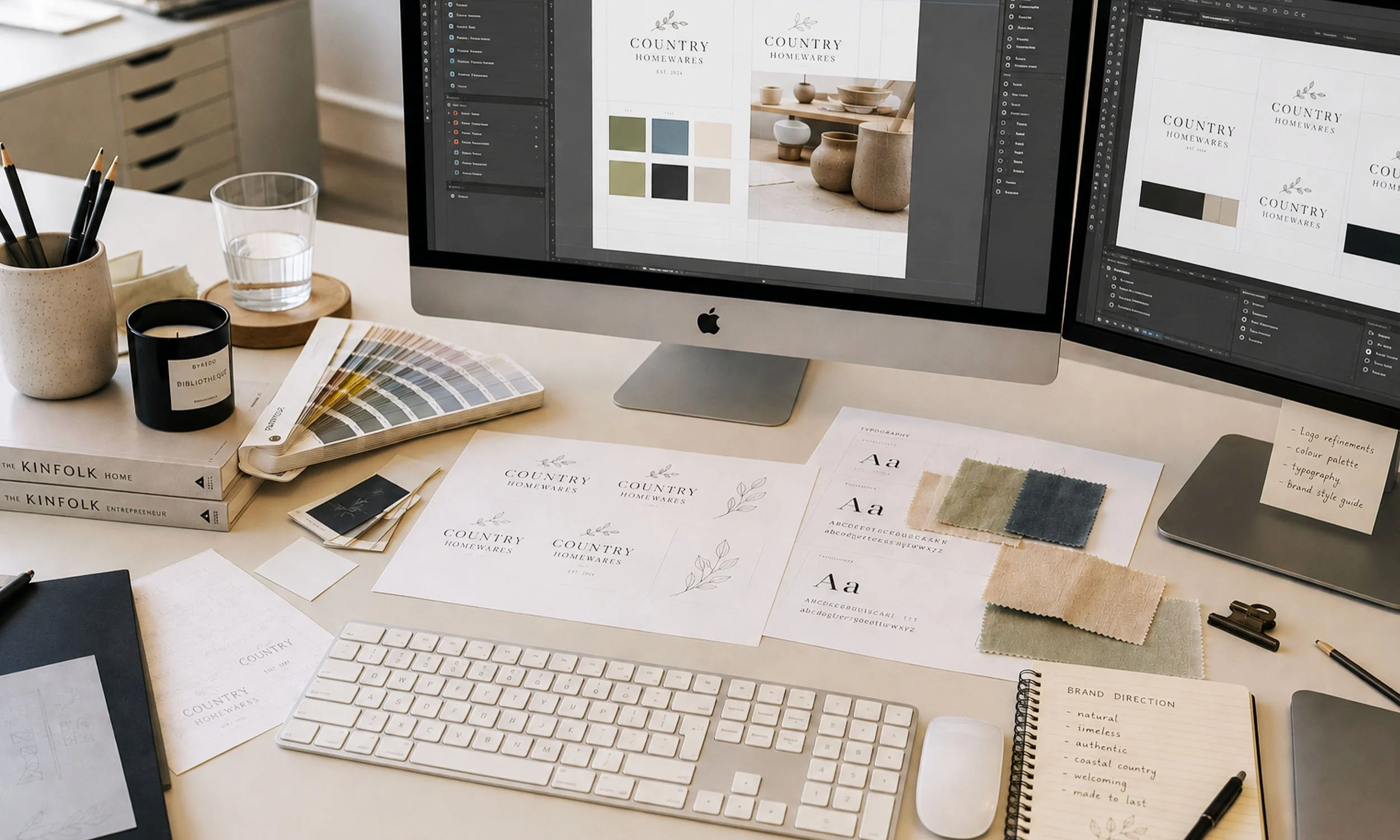
The first thing that everyone starting a business does is spend hours brainstorming for a name for the business. I’ve done it too, it’s the fun part! They then give that name to a graphic designer and say, “Hey, design me a logo that makes me stand out from the crowd.” The designer tries to wrap all of the owners hopes and wishes into one small symbol. Graphic designers are magicians!
But, the truth is, all the graphic designer has done is created a swish, or a leaf or a stylised symbol. It’s going to look great, but it’s not enough. It’s not the brand. It’s important, but the logo is only that one corner piece of a much bigger jigsaw. It’s not the personality, it’s not the heart and it’s not the whole picture of your business.
I would have loved to have been at that first meeting when the slightly nervous graphic designer put the Nike tick in front of the executives. It was just a swoosh, after all. It would have meant nothing when they first saw it. In fact, it’s pretty boring really. It wouldn’t have been until the marketing team added the rest of the ingredients that it would have started to turn into a brand – the colours, how it looked when it sat on the side of a shoe or next to the brand name Nike, how it would appear on header boards and signage. It would have looked nice. (BTW, don’t ever tell a designer that their work looks nice.)
But, it’s still just a swoosh. It’s stylish, but what does it actually mean?
That’s when the creative story teller from the team would have stood up in the meeting and added the context, the meaning, the emotion. They probably showed incredible footage of athletes running faster and jumping higher than ever before, with inspiring music that reached a crescendo just as the logo appeared in the centre of the screen and started to grow with importance. They would have told the story of how the swoosh represented the wings of the Greek goddess Nike and that this is not just a swoosh, it symbolises speed, power and movement. It’s about surging ahead, forward momentum.
The executives would have applauded, nodded to each other and patted themselves on the back for a job well done.
And now….we have the story and the Nike brand is born.
A logo is just another symbol until it’s wrapped in a story that resonates with a customer, tugs at their emotions and inspires them to purchase. Just like Nike’s swoosh does. In that moment, they will picture themselves surging forward on their Sunday morning runs and they will truly believe that they’ll be faster and more powerful when wearing these shoes, just as the brand promises.
This is what your business needs too. Get your logo right and wrap it up in the other elements that make up your brand identity, but that’s not enough - you must build the brand story around it. Give it the heartbeat that it needs. Give it a personality. Give it a voice.
Let’s break branding down into its parts, as that will explain it further:
Your logo is the face of your business – it’s what people see on your shopfront, your shopping bags, your receipts, your website, and your social media. It matters and it’s important to get it right.
A good logo should:
Be recognisable – simple enough that customers can spot it quickly.
Work in different sizes – from a street fascia sign to a Facebook profile picture and even the favicon on the tab of your website.
Be easy to read – isn’t too convoluted or creative. In a bricks and mortar store, it must be legible even when people are walking at a distance or driving past in their car.
Reflect your business personality – fun and playful, clean and modern, or classic and timeless.
But here’s where many small business owners trip up. They stop at the logo. They think, “Great, I’ve got a logo, so now I’ve got a brand.” Not quite. In fact, not even close.
THE COAT HANGER & THE CLOTHES
Your logo is like a coat hanger. On its own, it's functional, it holds things up, and it does its job. But it's not much to look at.
The brand is the clothes that hang on it — the colours, the fonts, the way your store looks and feels, the voice you use on social media, the experience customers have when they walk through your door. All of that together is what makes your business recognisable, even before someone spots your name.
Your brand is the total experience your customer has with your business - the look, feel and voice of your business. It’s how all the visual and practical elements come together and it’s what customers picture when they think of your business and your store, even before they see your name.
Think about your best friend. You don’t just know what their face looks like. You know their laugh, the type of clothes they will show up in, how they will wear their hair, what their laugh sounds like and what music they play in their car. You’d probably recognise their voice even before you turned around to see it was them. That’s the depth of recognition a strong brand can create for a business.
Your brand is all of those elements too, they hang off the logo and are what make your store recognisable - they are the clothes that your business wears. It’s these elements that will make your brand look pulled together, professional, and recognisable. These make up your brand style and you want them to resonate with your customer demographic.
So you have the face of the business (the logo), and you know what it’s wearing and sounds like (the brand), but now you need to give it a personality. This is the part so many people overlook, but it’s also the bit that matters most.
Your brand story is what gives your business life. It’s the why behind what you do. It’s the values and ideals that your business stands for and it’s the experience customers have when they walk into your store.
Think back to your best friend. You know their story inside out because they’ve told it to you over many conversations and some you’ve even shared in. You know what they care about, what they believe in, and how they see the world — and chances are, you share some of those same values. That’s what makes them a friend that you want to keep in your life, not just a polite acquaintance that you wave at and keep walking past.
Now imagine that you don’t know that person at all and you’re meeting them today for the first time. You don’t know their story yet and you’ve never spoken to them so all you have is a first impression. You can make judgements on the way they look, the clothes they wear, the sound of their voice but without knowing their story, you have no idea as to whether they could even be your friend, let alone your best friend. You’re not going to know until you find out more about them, share a joke and hear what they believe in. They’re just a face in the crowd until you get to know them better.
That’s exactly how it works with your brand. Your just a face in the crowd. Customers need to get to know you — to hear your story, experience your personality, find out about your values — before they feel that “click.”
“A logo might get someone through the door once. A strong brand makes them stay. But it’s the brand story that makes them tell their friends.”
WHAT THIS MEANS FOR YOUR BUSINESS
My guess is you've already got a logo. You might even have some brand elements such as colours and fonts that you use consistently. If so, that's a great start.
But have a think about whether your brand story is actually defined and out there for everyone to know? Or does it mostly live in your head?
Often the owner knows exactly why they started their business, what they stand for, and what makes them different. But their customers have no idea. Even their team might not really know. The brand story can sometimes be the owner’s best-kept secret but it’s often what gives a small retail business the edge over faceless corporations that can never create a personal brand story that resonates.
So before you do anything else, write down your brand story. Your values. Your passion. The reason you show up every morning. Your why. Once it's written down, it's real. And once it's real, you can start weaving it through everything you do so that your customers can know it as well.
In Part 2, we'll get practical and break down exactly what goes into building a brand that's consistent, recognisable, and unmistakably yours. Colours, fonts, voice and imagery, everything that goes into a brand that’s as recognisable as your best friend.